Promoting better Livelihood
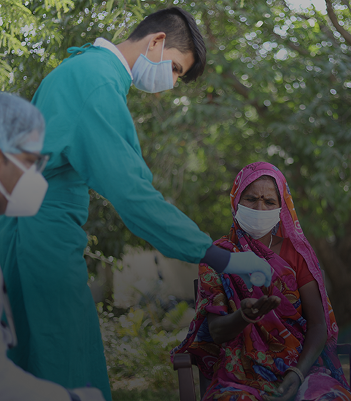
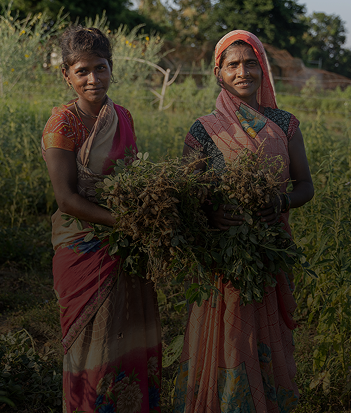
Promoting livelihood of the people by providing access to advanced skill development, local entrepreneurship models and self-sustaining community models
“I don't want India to be an economic superpower. I want India to be a happy country.”
Transforming People's Lives
The Yashraj Bharati Samman for Transforming People's Lives has been instituted to show our gratitude and respect towards the efforts of social leadership working towards the holistic development of the people of this country. The primary focus under this category would be to assess development and transformation in the field of education, livelihood, nutrition and sustainable development. Prospective awardees in this category should have worked in the following broad field of social welfare:
 Village Water Supply
Our country's population can be viewed as a major asset; an enormous work force that can drive the nation towards a better future. Yet, India's urban and rural unemployment hovers around the 8% mark and the Labour Force Participation Rate continues to float around the 40% mark. A tenth of the female population continues to be unemployed. The National Multidimensional Poverty Index (MPI) of 2021, developed by NITI Aayog in consultation with 12 ministries and state governments as well as index publishing agencies like Oxford University's Oxford Poverty and Human Development Initiative, and United Nations Development Programme, shows that about 25% of our population is multi-dimensionally poor. The index is based on the National Health Family Survey for 2015-16 (NFHS-4) data and is based on indicators such as child and adolescent mortality and access to nutrition, maternal health, education and schooling, cooking fuel, sanitation, drinking water, electricity, housing and other assets. The COVID 19 pandemic has only aggravated the situation.
Literacy in India has shown a positive trend and has improved from 73% in 2011 to 77.7% in 2022. But it still falls short of the global literacy rate of 86%. Female literacy rate in India at 70.3% is unacceptably low compared to the global female literacy rate of 83%. The girl child drop-out rate in schools remains alarmingly high. The forest cover in India stands at 21.71% of the total geographical area of the country. But it is still less than the envisioned 33% by a fair margin.
According to WHO, India contributes a third of the global burden of undernutrition.
The Three Categories